日本語A&M GROUP Official SiteProfessional AI Multi-AgentSound Engine DOMEarEffect

Consulting — AI Agents

Multiple AIs with different roles share the work,
and an AI that oversees the whole brings it together.

Work in a volume and variety that a single AI cannot handle is shared among multiple AIs, each with its own role. We run this system every day in our own business.

Agent
AI that takes on a role
Orchestration
Overall coordination
Multi-agent
Division of roles among multiple AIs

Issues

For challenges like these

The work does not fit within a single AI

Reading, investigating, writing, and verifying form one continuous workflow. If a single AI is given all of it, the work breaks down once the volume grows. When roles are divided, each can maintain its own accuracy and speed.

  • A single task involves many steps and documents
  • Each step requires a different judgment
  • If it stops midway, no one knows how to continue

People's hands have become the connecting link

People are carrying data between systems by hand. We hand the transfer of data between systems to AI agents with defined roles, so that people handle only the points that require judgment.

  • Looking at one screen and retyping it into another
  • People run scheduled checks and communications by hand
  • Work stops when the person in charge is absent

Wanting to expand the scale

We want to handle more volume without adding people. We design the system so that even as volume grows, it can respond by adding AIs for each role. Our AI, which handles bid notices from government agencies and other public bodies, judges approx. 100,000 notices every day.

  • More people are needed every time the volume increases
  • Speed and quality of response cannot both be achieved
  • We want to preserve experienced staff's judgment as a system

Scope

What we handle

AI agents

We build AI that takes on a defined role and advances procedures using tools and data. It is AI that completes a single role using tools and data and leaves the result in a record.

  • Designing roles and decision criteria
  • Connecting tools (systems, browsers, files)
  • Design of the human approval step

AI orchestration

We bring AI, external services and scheduled processes together in one central place and run them in the order you set. Scheduled start times, sequence, parallel runs, reruns after failures and human approvals are all defined centrally, so the whole becomes a single flow.

  • Control of sequence, parallelism, and re-execution
  • Detection and notification when it stops
  • Processing and records of evidence

AI multi-agent

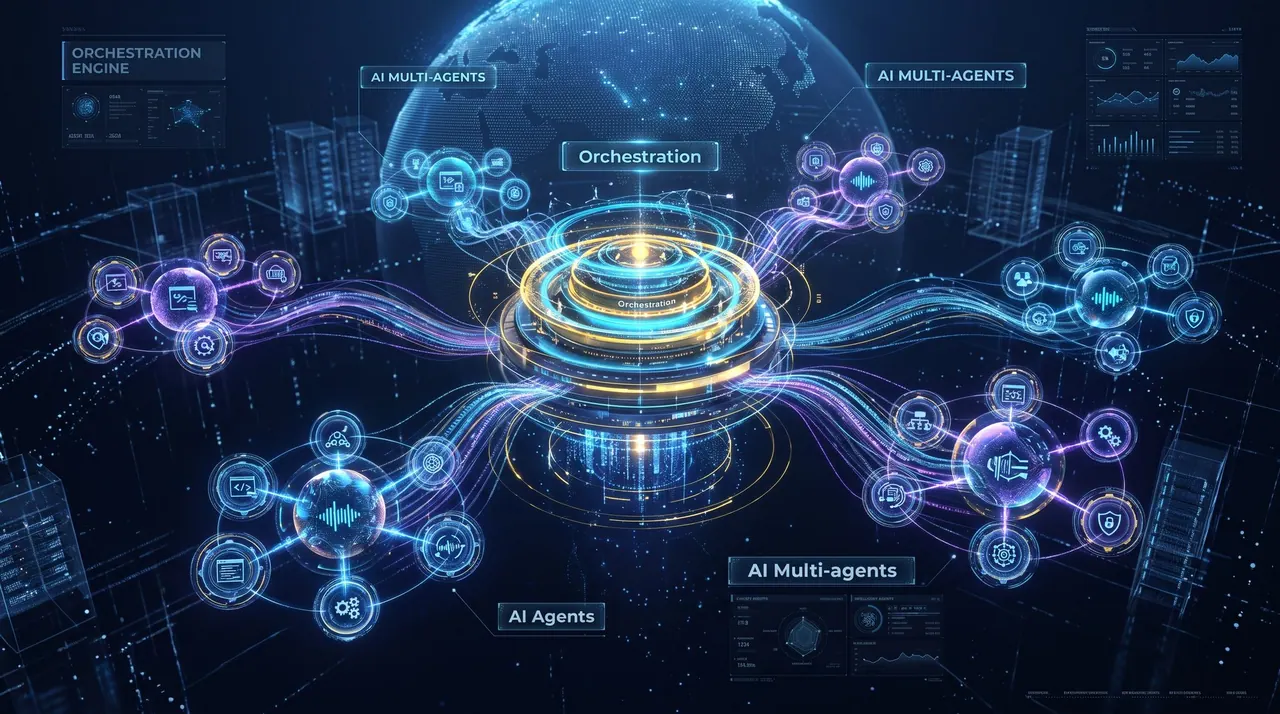
Multiple AI with different roles share the work, and a central AI coordinates them to finish the job. We separate roles such as collecting, judging, drafting and checking, and set the handoff formats so they work together.

  • Agents by role
  • Handoffs between agents
  • Overall management screen and monitoring

In depth

We do not leave everything to one AI;
we divide the roles and bring the whole together

If you leave collecting, reading, judging, writing, and checking all to a single AI, both accuracy and speed break down as volume grows. Just as human organizations handle large work through division of labor, dividing roles among AIs changes the scale of work they can handle by orders of magnitude.

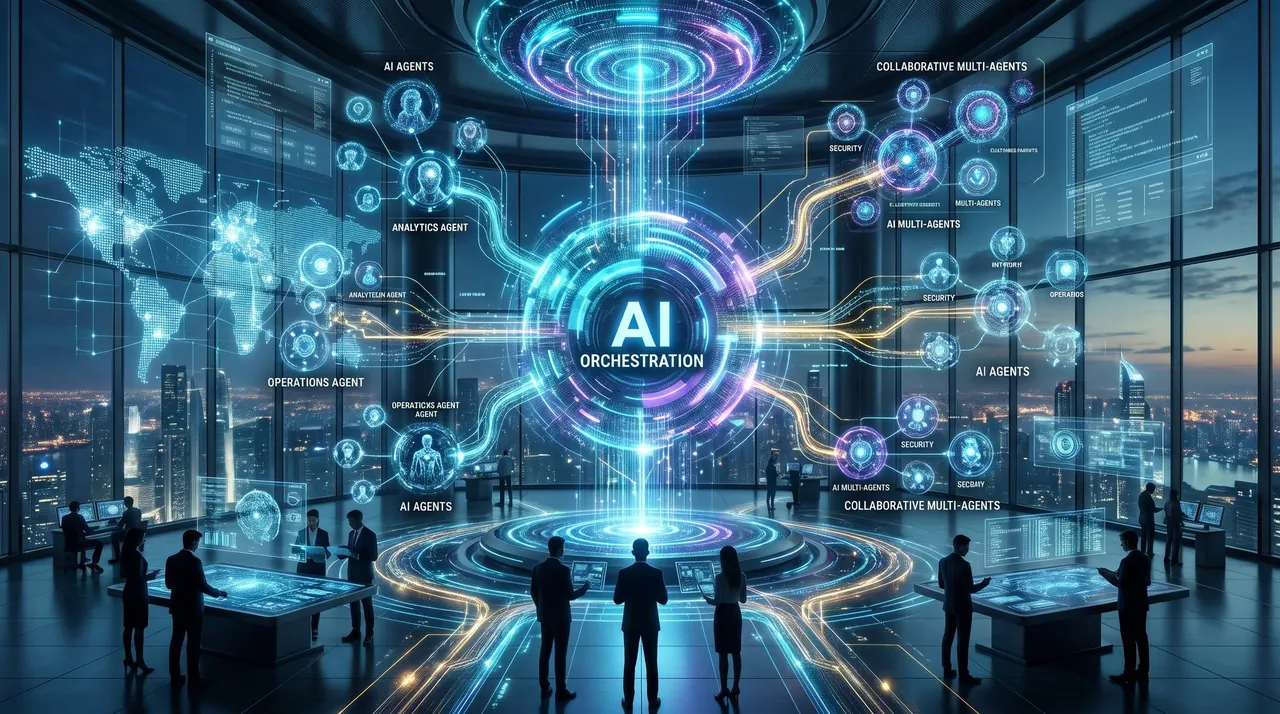
An AI agent is an AI that uses tools to carry out a single role to completion; AI orchestration is central control that runs steps in a set order; an AI multi-agent system is a mechanism in which AIs with different roles work together. We combine these to fit the shape of the work, and place human approval at steps that require judgment.

The multi-agent that oversees the operation of our entire business uses seven agents to gather the current status of all businesses, the matters requiring the executive's decision, and the issues, and it handles everything from proposing improvements to carrying them out after the executive's approval. We take consultations based on a configuration that runs every day without stopping, not on a diagram drawn on paper.

Case study

Case Study

We present the flow and the finished form in the form of reports. Each one states clearly whether it is based on our actual operations or is an example assumed from how such work is normally done.

AI gathers the current status of all businesses every day and compiles it into a list
Example based on our own operating experience

Multi-agent system overseeing operations across the whole business

Every day, AI gathers the current status of all businesses
and compiles it into a list

This is an example from our own company. Separate systems ran for each business, covering bidding, e-commerce, logistics and support for preparing audit working papers, and the only way for management to grasp the situation was to open each screen in turn.

  1. Add a connection point (API) to each business's system for reading its status
  2. Separate the agents by role: gathering the current status, matters requiring a decision, and issues
  3. Central control runs collection, checking, and proposals in sequence at set times
  4. Operations with an impact are executed only after human approval
  5. Check the results of each run at the next one and draft improvement proposals

ReportReport for this case

Flow
A daily cycle of scheduled start → collection → inspection → proposal → approval (by a person) → execution → verification.
Deliverables
  • A screen that brings together the current status of all businesses and the matters requiring decisions
  • Improvement ideas and records of approval and execution
  • Operating records of 7 agents
Points to confirm
  • Whether matters requiring a decision appear on the list before their deadline
  • Whether any unapproved operation has been executed
  • Does it detect stopped agents and send notifications?
Collection, assessment, drafting, and confirmation are divided among AIs with different roles
Example based on our own operating experience

Bidding multi-agent system

Collection, assessment, drafting and verification are
shared among AIs with different roles

This is our own example. Bidding work is a long, continuous chain, from collecting public notices to cross-checking documents, and when we entrusted it all to a single AI, accuracy dropped under the sheer volume.

  1. Separate the roles of collection, assessment, drafting and cross-checking
  2. Define the tools to be used and the record format for each role
  3. Central control runs them in the set order four times every day
  4. Detect failed retrievals, retry them, and keep a record
  5. After executives decide which projects to bid on, the AI in charge of drafting documents starts work

ReportReport for this case

Flow
Scheduled start → collection → judgment → recording → executive decision → drafting → reconciliation, run through a division of roles.
Deliverables
  • Results of approx. 100,000 judgments per day, and a management table of 1,108 cases
  • Operation records by role
  • Drafted documents and the results of cross-checking
Points to confirm
  • Does the failure of one role bring the whole process to a halt?
  • Whether the reasons for assessments are kept on record
  • Whether any step of human judgment is being skipped
Intake, classification, drafting, and confirmation are divided among multiple AIs
Example based on typical ways of working

First-line handling of inquiries

Intake, classification, drafting and verification are
shared among multiple AIs

At an online retail company, inquiries about orders, shipping, returns, and how to use products arrive mixed together by email and web form, and one person handles everything from sorting to replying.

  1. An AI assigned to read inquiries classifies them by content and urgency
  2. An AI whose role is to look things up in the system verifies order and delivery status
  3. The AI in charge of drafting replies writes them according to the rules
  4. The person in charge checks the draft and sends it
  5. Record what was sent and any classification errors, and correct the instructions

ReportReport for this case

Flow
The workflow runs by role in this order: intake → classification → status inquiry → draft → staff review and sending → record.
Deliverables
  • A list of inquiries with categories and urgency levels
  • A draft reply that includes the results of checking the situation
  • A record of classification errors and corrections
Points to confirm
  • Whether urgent inquiries are listed first
  • Has the AI sent anything on its own?
  • Whether the time of the queried data is attached

Multi-agent

Work that one AI cannot handle
is processed by multiple AIs with divided roles

We operate our own AI systems, including the multi-agent system that oversees operations across the whole business, doing the work of several thousand people.

Process

How to proceed

  1. Task breakdown

    We break the business down into roles and steps. We write out a continuous business process by role: input, judgment, and output.

  2. Role design

    We decide which roles are left to AI and which judgments people take on. We define the roles assigned to AI and the stages where people approve, and set the format for handovers.

  3. Prototyping

    We start with the core roles and verify them with real data. We build the role with the greatest effect first and confirm its accuracy with real data.

  4. Connecting everything

    We build the central control and records, and bring the whole into one flow. We build the central control and records, and run the role-specific AIs in a set order.

  5. Deployment, operation, and monitoring

    We run it in actual business, and when something stops, we detect it and fix it. We detect and report agents that have stopped, retry automatically, and pass the task to a person if necessary.

Estimate

What Determines the Cost

We put together quotations based on the following points. In quotations by our AI, the AI asks about the same points in order, according to the type of inquiry.

  1. Number of agent roles

    The number of roles to be shared and how difficult each one is. The more roles there are and the harder each one is, the more design and verification work is needed.

  2. Central control

    Sequence, parallelism, re-execution, and human approval. The more stages of parallelism, re-execution, and human approval there are, the more control design work is required.

  3. The documents and formats handled

    The volume and types of materials, and the output formats. The more types of materials and output formats there are, the more adjustment each role requires.

  4. Availability and monitoring

    How critical it is that the work never stops, and the monitoring that supports it. The less a process can afford to stop, the more we strengthen its monitoring and recovery mechanisms.

Why A&M GROUP

The engineer who receives your inquiry will go on to handle the development.

  1. There are no handovers between staff members.

    The engineer who did the interviewing designs and implements the system directly. Requirements do not drift through back-and-forth specification documents.

  2. We operate them every day in our own business

    We actually operate 8 AI systems that do the work of several thousand people in our own business, including the multi-agent system that oversees the operation of the entire business. Our advice comes from experience of running them, not from proposals on paper.

  3. We propose the suitable method, not only AI

    Where AI is not needed, we will tell you so. If an off-the-shelf tool is enough, we will propose that approach as well.

  4. We also handle operation and improvement after delivery.

    We run it in actual operation and take responsibility through to detecting faults and continuing to fix them. We operate our own 8 AI systems under this structure every day.

This website

This site itself is
a working example of AI use.

This site is designed as an AI web system. It is a place where you can see AI multi-agent orchestration, which processes many complex tasks in parallel, in actual operation and deepen your understanding of it. At the same time, it is operated as a working example to help you consider concretely how to advance your own company's use of AI.

Business AI multi-agentHandles the work of 2,000 people per dayBiddingOrders & inventoryShippingAudit papersFinanceBusiness oversight AIGathers information across the businessSite oversight AIHandles the work of 72 people per dayEditing & updatesEnglish translationSearch optimization (self-directed)QuotationsReception & registration checksAI securityManager's approval & sign-offSEO proposals & final sign-off on quotesApplied to all pagesWebsite of 112 pagesLearns from search data and inquiries for the next updateStrategic thinkingThinking AI that supports management decisionsOrganizes issues, options and rationaleRequests a decisionManagement Decisions (CEO)Policy, approval and final decisionsRecords decisions and makes them rules for all AIReports results and insightsPolicy and rules go to all AI

Operating scale — from system logs

AI that carries the work of thousands of people,
operated every day in our own business.

Every proposal is a method we have run and verified in-house. Our AI processes every day a volume of work that would require multiple departments if handled manually.

approx. 100,000cases/day

Checks bid notices published by government agencies and others 4 times every day, with AI judging deadlines, participation conditions, and fit with our company

1,108cases

Bidding projects whose deadlines and progress are managed by AI

4,084items

Orders, inventory, pricing, advertising, and finance on one platform

86functions

In-house system functions that can be run directly from AI assistants

8systems

AI systems we actually run in our own business

Values retrieved from each system's records (as of November 9, 2026). "Thousands of people" is a figure we calculated: we converted this workload into the effort it would take people to process it with the same tasks, and took the number of people needed to finish it within twenty-four hours. It is not a measurement by a third party.

View the workload breakdown

Contact

Please contact us about building AI agents.

Select a contact point and describe your request. Together with an AI guide, we will organize the specifications and prepare a rough estimate on the spot.

Request a quote for this plan